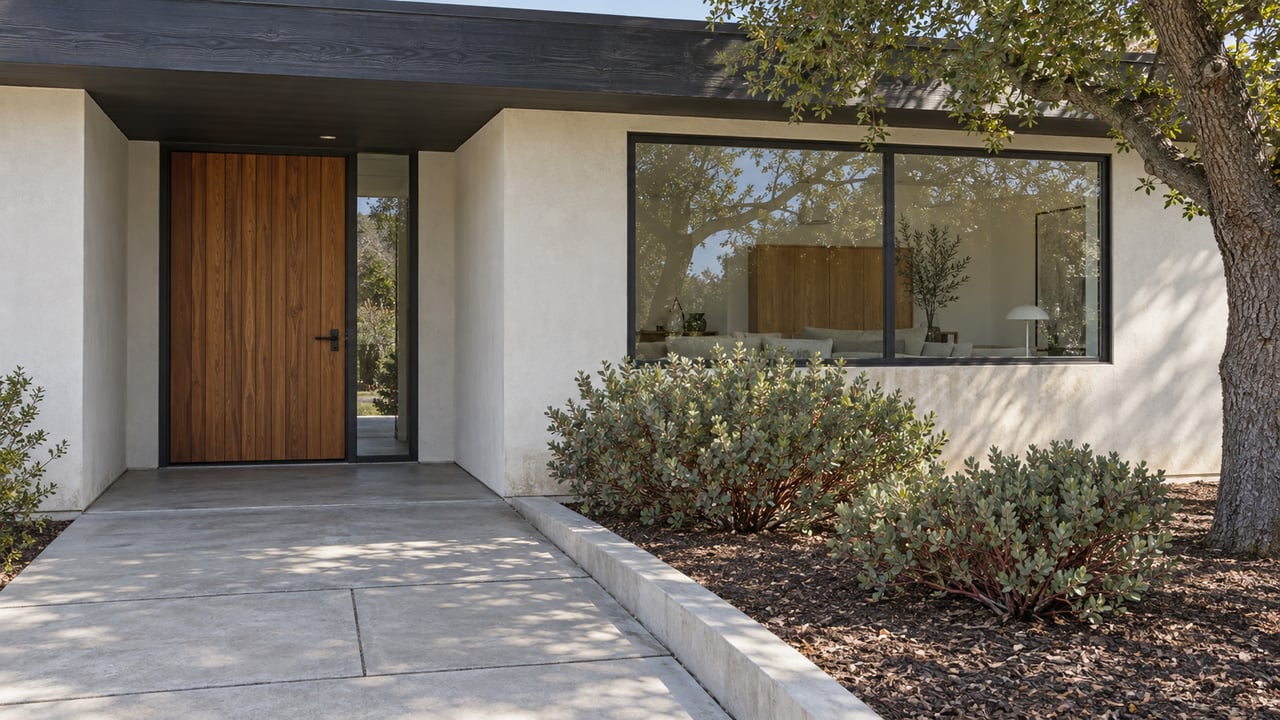
Berkeley's Transfer Tax Has a Cliff, and the Typical Home Sale Is Standing on It
A Berkeley home that sells for $1,700,000 owes the City $25,500 in transfer tax. That is the City's own example, and it reflects a 1.5% rate. Sell the same house for $1,700,001 and the City's rate becomes 2.5%, charged on the full price. The bill comes to about $42,500. One extra dollar of sale price adds roughly $17,000 in city tax.
Berkeley isn't the only city with a two-rate schedule. What makes it bite right now is where Berkeley prices sit. In August 2026 the median detached home in Berkeley sold for exactly $1,700,000. On January 1, 2027, the line itself moves.
Most taxes people know are marginal. Cross into a higher bracket and only the dollars above the line pay the higher rate. Berkeley's Municipal Code Chapter 7.52 doesn't work that way. Under the 2026 rules, a transfer valued at or below the threshold pays 1.5% of the full value of consideration. A transfer above the threshold pays 2.5% of the full value.
The threshold isn't fixed. Under Measure P, which voters approved in November 2018 with 72% support, the City resets it every January 1. The new figure is the 67th percentile of Berkeley transaction values recorded by the Alameda County Assessor in the 12 months before the prior September 1, rounded to the nearest $100,000. It can never go below $1.5 million. For 2026 that formula produced $1.7 million, the figure on both the City's transfer tax page and the Alameda County Clerk-Recorder's rate table.
Alameda County charges its own documentary transfer tax on top of that, at 55 cents per $500 of value. The county rate is small and flat. The cliff belongs to the City.
A threshold set at the 67th percentile was meant to reach roughly the top third of transfers. The City describes Measures P and W as a tax on "the top 1/3 most expensive properties." That reach includes every kind of transfer. For single-family homes, Bay East Association of Realtors reported these figures for Berkeley in August 2026:
Bidding at that level means the list price says little about which side of the threshold a sale will land on. A home listed at $1,295,000 that drew the August average of 133% would close at about $1,722,000. That puts it above the line, taxed at 2.5% on the whole amount. The 133% is an average across all August sales, not a forecast for any single home. Still, a seller pricing in the low $1.3 millions is pricing into a range where a strong bidding week can carry the sale over the cliff.
The City's books show the same pressure. Its February 26, 2026 midyear revenue report recorded $6,586,501 in Measure P receipts for the first half of fiscal year 2026. That was up 36.3% from the same period a year earlier. Total property sales were $976.6 million across 449 transactions, compared with $794.6 million across 414. Measure P money comes only from sales above the threshold. Its receipts grew about twice as fast as the City's general transfer tax line, which rose 18.1% over the same period.
Measure W passed in November 2024 with 61% approval. It takes effect January 1, 2027, removes Measure P's 2029 expiration date, and replaces the single cliff with three. Under the 2027 code, every rate still applies to the full value of consideration:
The published floors are $1.6 million, $1.9 million and $3.0 million. Each one resets annually to the 60th, 80th and 95th percentile of recorded transactions, and no adjustment can push a floor below its starting figure. The first threshold moves from the 67th percentile to the 60th, so the 2.5% rate is designed to cover a larger share of sales than it does today. The City says the threshold amounts "will be recalculated prior to the effective date." As of October 10, 2026, our research found no published recalculated figures. The floors are the lowest the thresholds can be, not confirmed 2027 numbers.
There is also a small wording change with a real effect. The 2026 code gives the 1.5% rate to sales "at or below" the threshold. The 2027 code charges 2.5% on sales "equal to or higher than" the first threshold. A sale priced exactly at the line pays the lower rate today and the higher rate next year.
Here is what the City's tax would look like at a few prices, using the published 2027 floors as placeholders:
| Sale price | 2026 city tax | 2027 city tax if the floors hold |
|---|---|---|
| $1,590,000 | $23,850 at 1.5% | $23,850 at 1.5% |
| $1,650,000 | $24,750 at 1.5% | $41,250 at 2.5% |
| $1,750,000 | $43,750 at 2.5% | $43,750 at 2.5% |
| $1,950,000 | $48,750 at 2.5% | $58,500 at 3% |
The City expects the new tiers to bring in money. Its June 23, 2026 adopted budget projects $1.5 million in Measure W revenue for fiscal year 2027, which covers only the half year after January 1. It projects $3 million for fiscal year 2028.
Berkeley lets owners recover part of the transfer tax by spending it on earthquake strengthening. The rebate is dollar for dollar on qualifying costs. It is capped at one-third of the base 1.5% tax, and it doesn't apply to the higher-tier portion. The 2027 code keeps that limit. Any reduction stays capped at what the base rate would allow, however high a tier the sale lands in.
Put simply, the rebate tops out at 0.5% of the sale price, while the tax itself can reach 3.5%. On a $1,950,000 sale at a 3% rate, the most the rebate could return is $9,750, about one-sixth of the bill. At 2.5% the cap equals one-fifth of the tax. At 3.5% it falls to one-seventh. A separate home-hardening rebate counts against the same one-third cap, so combining the two doesn't raise the ceiling.
The process has firm rules that can trip people up:
Under local custom, the cliff isn't one party's problem. Old Republic Title's California closing cost guide, dated November 2023, shows the Berkeley city tax split 50/50 between buyer and seller in Alameda County, with the county tax paid by the seller. The guide says these are customs and can be negotiated. If the split holds, an overbid that crosses the threshold adds roughly $8,500 to each side's share. The buyer who wins at $1,710,000 pays half of a much larger bill than the buyer who stopped at $1,700,000.
The refund follows the contract. When retrofit work happens after the sale, the code says the City refunds qualifying expenses "to the parties to the sale in accordance with the terms of such sale." Who gets the rebate depends on how the purchase agreement handles the tax and the retrofit, so that language matters for both sides.
Has Berkeley published the 2027 thresholds? Not as of October 10, 2026, based on our research. The City's pages still show the ballot-era floors of $1.6 million, $1.9 million and $3.0 million, along with a note that the figures will be recalculated before the new tiers take effect.
Can the 2027 thresholds come in below the floors? No. The code bars any adjustment that would push a threshold below its starting floor.
Do condos and duplexes qualify for the seismic rebate? Buildings used only as homes qualify, and so do mixed-use buildings with two or more units.
If your Berkeley list price could plausibly end up near $1.6 million or $1.7 million, it helps to know the transfer tax at every likely outcome before the offers arrive. Mark Choi can walk you through how the current threshold, the 2027 tiers and the seismic rebate apply to your specific sale, and how your contract can address them.
This article is general information, not legal, tax or financial advice. Consult a qualified professional about your situation.
Stay up to date on the latest real estate trends.
My objective is to get the top dollar for your home in the current dynamic real estate market and to make the process of listing or buying your home as stress-free and fun as possible.
MARK P. CHOI | CA DRE# 01433100
1619 Shattuck Avenue Berkeley, CA 94709