In Kensington, The View Comes With An Asterisk
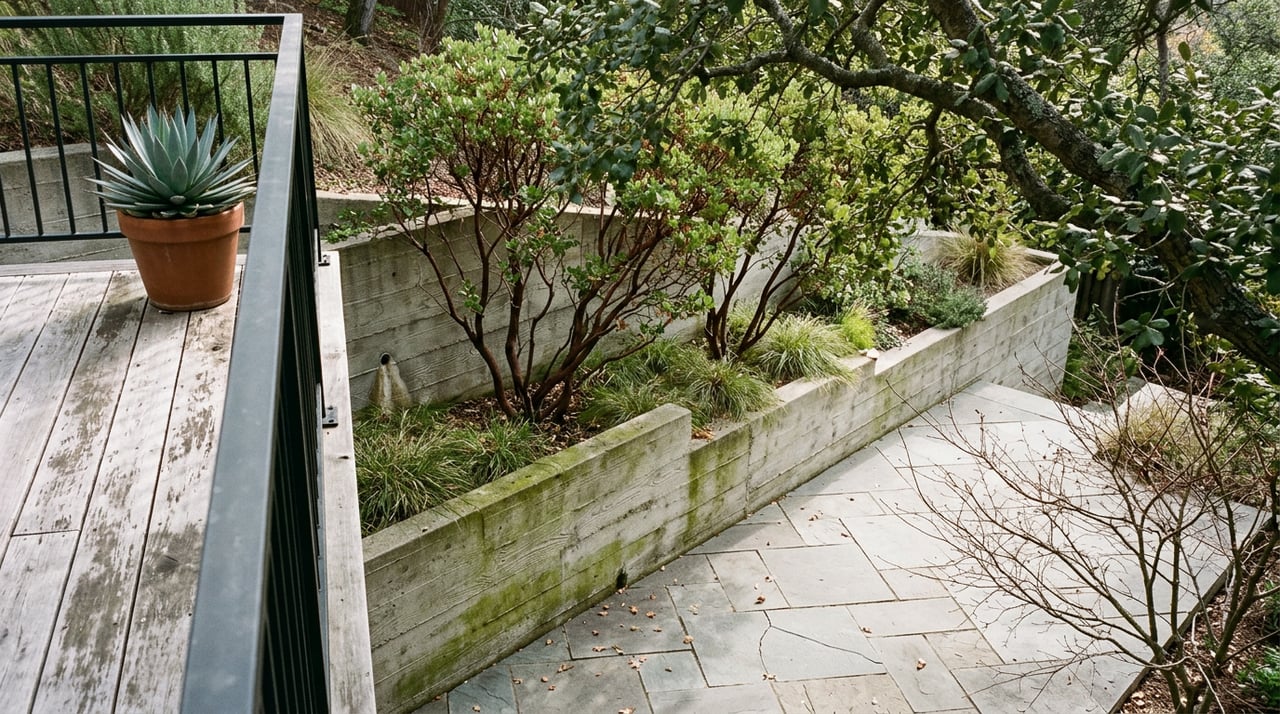
Every listing description for a Kensington hillside home eventually gets to the same sentence: unobstructed views of the Bay, the Golden Gate, San Francisco on a clear day. It's the line that justifies the price per square foot. In Kensington, however, a view is not a fixed asset. It's a legal condition, actively managed by a county ordinance, subject to arbitration, and defined by a standard that has nothing to do with how much sky and water you can see today.
That distinction matters when you're buying or selling. Kensington is unincorporated Contra Costa County, but it runs its own police department, fire service, parks, and refuse collection through locally elected boards, an arrangement almost no other unincorporated community in the state has. Two local rules directly affect what you're buying or selling here: a tree ordinance that treats views as something to be protected through arbitration, and a sewer lateral rule that turns a routine title transfer into a mandatory inspection. Both can add weeks to an escrow, so it is worth accounting for them early.
Kensington's Tree Obstruction of Views Ordinance has existed since 1984, but the Board of Supervisors substantially updated it on November 12, 2024, with the adoption of Ordinance 2024-21. It applies only in unincorporated Kensington. El Cerrito and Berkeley, despite sharing the same hills and the same trees, have no equivalent.
The mechanism is deliberately slow. A homeowner who believes a neighbor's tree has grown into their view starts with informal reconciliation, then voluntary mediation. If that fails, the dispute goes to arbitration, binding if both sides agree to it, non-binding if they don't, in front of a Tree Arbitration Board made up of Kensington residents appointed through the Kensington Municipal Advisory Council. The board meets monthly, on the last Wednesday, at the Kensington Library on Arlington Avenue, and hears cases both in person and over Zoom. If arbitration doesn't resolve it, the last resort is civil court.
Here's the detail that changes how you should think about a Kensington view as a buyer or seller: the ordinance doesn't protect the best possible view. It protects the view that existed at the moment the current owner purchased the property. A person filing a view claim has no right to a view greater than what existed when they bought the home. In practice, that means the value of a view lot is tied to a specific historical baseline, not to whatever the trees happen to look like on the day you list.
If you're selling a home where the view is doing real work in the listing, it's worth knowing whether that baseline has ever been tested. A prior view claim, resolved or pending, is the kind of thing a buyer's agent will eventually find, and it's better coming from you first.
The tree ordinance handles disputes about existing vegetation. A different rule governs new construction, and it's just as specific to Kensington. Under the county's Kensington Planning Ordinance, known formally as the Kensington Combining District (Chapter 82-74.2), any new residential development in Kensington goes through KMAC review before it can get a building permit. KMAC's job is to assess whether the project provides reasonable protection for existing residences on views, design compatibility including bulk, size, and height, adequate parking, privacy, and access to sunlight. KMAC then makes a recommendation to the Contra Costa Community Development Department, which issues the actual permit.
This isn't a dusty rule nobody uses. A public hearing notice from January 28, 2026 shows KMAC reviewing a project on Willamette Avenue that included a tree permit tied to a code-protected tree that had previously been removed, alongside the standard view and design review under the Combining District. Neighbors are invited to submit evidence, documents, photos, or an oral presentation, in support of or opposition to the project.
For a buyer eyeing a teardown or a major addition in Kensington, this is the process that will shape what you're allowed to build and how long it takes to get there. For a seller whose home backs up to an empty or underbuilt lot, it's the process that will determine whether your own view survives the next decade.
| Tree Obstruction of Views Ordinance | Kensington Planning Ordinance (Combining District) | |
|---|---|---|
| Triggered by | Existing vegetation blocking a neighbor's view | New construction or major additions |
| Reviewed by | KMAC Tree Arbitration Board | KMAC, recommending to Contra Costa CDD |
| Standard applied | View as it existed when the claimant purchased | Views, design compatibility, privacy, sunlight access, parking |
| Resolution path | Mediation, then arbitration, then civil court if needed | Public hearing, KMAC recommendation, permit decision |
The second friction has nothing to do with views. Kensington sits within the Stege Sanitary District, which also covers El Cerrito and Richmond Annex, and since 2011 sewer lateral compliance in that district has been governed by an EBMUD regional ordinance. The rule is straightforward and non-negotiable: a property owner must obtain a Compliance Certificate for the sewer lateral whenever title transfers, whenever a remodel is valued at $100,000 or more, or whenever the water meter size changes. A sale counts every time.
Getting the certificate means scheduling a hydrostatic or low-pressure air test witnessed by an EBMUD inspector. If the lateral passes, EBMUD issues the certificate, which stays valid until the next required test or for up to roughly a decade, whichever comes first. If it fails, the owner needs a plumbing contractor registered with Stege Sanitary District, a sewer permit from the district, and sometimes an encroachment permit from the county if the work touches the street or sidewalk, before retesting.
This matters more in Kensington than it might elsewhere in the East Bay for one reason: housing age. Across the EBMUD service area, most homes were built before 1950 and many have never had their original laterals replaced. Those older lines, mostly clay, crack and shift over decades, and tree roots find their way in. Stege's own planning documents note that laterals can account for as much as 70 percent of the rainwater infiltration that overwhelms the sewer system during storms, which is exactly why the certificate requirement exists and why it isn't optional at the point of sale.
None of this shows up on a standard disclosure checklist until an escrow officer or a buyer's inspector asks for it. If a lateral fails the test after you're already in contract, the repair, permit, and retest cycle can run several weeks, right when a buyer is counting down toward a closing date.
Kensington has its own police force and its own fire district inside an unincorporated pocket of the county. Its tree ordinance provides a way to resolve view disputes before turning to court, and KMAC review considers projects before a lot is built out. Those processes offer protections, but they also add homework that doesn't exist in most other East Bay transactions.
Does the Tree Obstruction of Views Ordinance apply anywhere outside Kensington? No. It applies only in unincorporated Kensington. Neighboring El Cerrito and Berkeley have no comparable ordinance.
Who actually decides a view dispute? The KMAC Tree Arbitration Board, made up of Kensington residents, hears the case after mediation fails. Its decisions can be binding if both parties agree in advance, or non-binding if they don't, in which case either side can still go to civil court.
How long is an EBMUD sewer lateral Compliance Certificate good for? It stays valid until the next required test and new certificate are issued, or for up to roughly ten years, whichever happens first. A sale, a remodel valued at $100,000 or more, or a water meter change all trigger a new requirement regardless of how recently the last certificate was issued.
Kensington rewards buyers and sellers who understand its particular rules before they matter, not after. If you're weighing a sale, a purchase, or simply want to know where your property stands on either of these fronts, Mark Choi can walk through the specifics with you before you list. Start Your East Bay Home Search today and bring the questions that only a Kensington transaction raises.
This article is general information, not legal, tax or financial advice. Consult a qualified professional about your situation.
Stay up to date on the latest real estate trends.
My objective is to get the top dollar for your home in the current dynamic real estate market and to make the process of listing or buying your home as stress-free and fun as possible.
MARK P. CHOI | CA DRE# 01433100
1619 Shattuck Avenue Berkeley, CA 94709