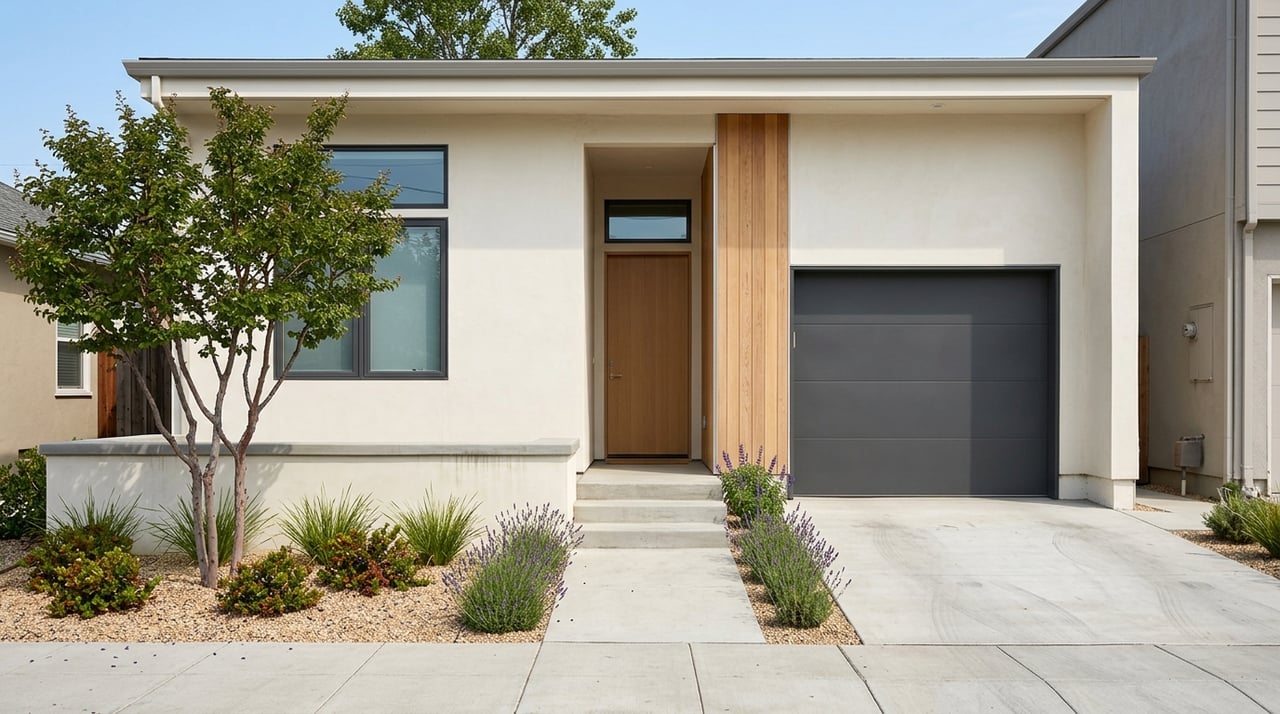
Single-Family Or Townhome In Richmond: How To Decide
Trying to choose between a single-family home and a townhome in Richmond? It is a common decision, and the right answer depends less on buzzwords and more on how you want to live day to day. If you are weighing budget, maintenance, parking, commute, and future flexibility, a clear side-by-side comparison can make the choice much easier. Let’s dive in.
Richmond gives you both options, but not in equal numbers. According to the city, about 59.5% of housing units are 1-unit detached, while 8.6% are 1-unit attached. Richmond also uses the attached single-family category for townhouses, half-plexes, and row houses.
That mix matters because buyers here are not just comparing floor plans. You are often comparing two different ownership experiences. One gives you more private control over the property, while the other may reduce some of the day-to-day upkeep.
Richmond’s household and commute patterns also shape the decision. The city reports an average household size of 2.82, an average family size of 3.46, and 34.5% of households with people under 18. At the same time, 62.0% of workers drive alone, 9.6% use public transportation, and 12.0% work from home, which makes convenience and maintenance an important part of the conversation.
Richmond defines a detached single-family home as a structure with open space on all four sides. In many cases, these homes also include features like an attached garage and a private lot. That setup usually gives you more separation from neighbors and more direct control over the property.
Richmond treats attached single-family housing as a category that includes townhouses, half-plexes, and row houses. These homes share walls, but they are still a form of single-family ownership in many communities. For buyers, the practical difference is often less about the label and more about maintenance, rules, parking, and monthly costs.
If you want more independence, a detached home often checks that box. You usually have direct responsibility for the structure, yard, exterior upkeep, and repairs, which means fewer shared decisions and fewer community rules affecting day-to-day property care.
That extra control can be a real advantage if you value privacy, storage, or outdoor space. It can also matter if you want flexibility for future changes. In Richmond, ADUs are allowed on lots with single-family or multi-family housing as the primary use, and the city says it has permitted 372 ADUs since 2019 through January 1, 2025.
Richmond also allows detached, attached, conversion, and JADU formats. If you are thinking long term about multigenerational living, guest space, or possible rental income later, that flexibility may make a detached home more appealing.
For many buyers, the biggest appeal of a townhome is a simpler maintenance routine. Exterior work, shared landscaping, and common areas are often handled through a homeowners association, which can reduce the amount of hands-on upkeep you manage yourself.
That convenience comes with tradeoffs. Under California Civil Code section 4775, unless the governing documents say otherwise, the association maintains common area, the owner maintains the separate interest, and the owner maintains exclusive-use common area while the association handles repair and replacement of that area.
In plain terms, you should not look at HOA dues as just another bill. They are tied to how the community is maintained, how responsibilities are split, and whether future costs could show up through special assessments. Before you buy, it is smart to compare dues, reserves, and maintenance obligations carefully.
A lower list price does not always mean a lower cost of ownership. In Richmond, some townhome communities may include HOA dues, and in certain areas, buyers may also need to confirm whether landscape or lighting district charges apply.
The city’s Parks and Landscaping Division lists maintenance of the Hilltop Landscape Assessment District and the Marina Bay Landscape & Lighting Assessment District. If you are considering a home in those areas, ask for a full picture of recurring costs so you can compare homes fairly.
This is especially important in a city where the reported median owner-occupied home value is $650,100 and the median household income is $90,038. Even when two homes feel similar on paper, the monthly ownership experience can look very different once dues, maintenance, and parking needs are included.
Parking can be a bigger factor in Richmond than many buyers expect. The city’s code includes specific standards for residential off-street parking, driveways, garages, and carports, and required off-street parking must be independently accessible from the street.
The code also says that residential parking in the front half of a lot, or within 25 feet of a side street on a corner lot, generally must be covered by a carport, garage, or roofed structure, subject to exceptions. In practice, that can make detached homes with their own driveways and garages feel simpler for some buyers.
With townhomes, parking can vary a lot from one community to another. Some may have garages, assigned spaces, guest parking rules, or layout quirks that affect everyday convenience. That is why it helps to review parking details community by community instead of making assumptions.
If private outdoor space is high on your wish list, detached homes often have the edge. A yard can be useful for entertaining, gardening, storage, or simply having more breathing room around the home.
A detached lot may also offer more flexibility if your needs change over time. For example, buyers planning for extended household use or future ADU options may prefer the added space and control that often come with a single-family property.
Townhomes, by contrast, usually trade some of that private outdoor space for a more compact footprint. That can still be a great fit if you would rather spend less time maintaining a yard and more time enjoying a lower-maintenance setup.
Richmond’s zoning and planning framework helps explain where different housing types show up. The city describes RL1 as very low-density single-family hillside residential. RL2 is a low-density district that can include attached and detached single-family homes, townhomes, cottages, and bungalows. SFR-3 is intended to preserve primarily single-family dwellings on larger lots.
In general, townhomes are more visible in planned or transit-oriented growth areas. Richmond planning documents identify townhome product in Marina Bay, Brickyard Cove, and Hilltop, including projects such as Anchorage at Marina Bay Phase II, a 94-unit townhome development in Brickyard Cove, and a 45-unit townhome complex at 3151 Garrity Way in the Hilltop area.
Downtown also stands out for buyers thinking about commuting. Richmond’s development materials describe the Richmond Multi-Modal Transit Station as a direct connection to BART, AC Transit rapid bus service, Amtrak, and the Capitol Corridor, with a 760-space parking center supporting the area’s transit-oriented character.
A detached home may be the better fit if you want:
This option often makes sense for buyers planning several years ahead. If your priority is flexibility rather than simplicity, single-family homes usually offer more ways to adapt over time.
A townhome may be the better fit if you want:
This option can be especially appealing if commute convenience matters more than yard size. It can also work well if you prefer predictable upkeep through an HOA structure, as long as you are comfortable reviewing the rules and costs that come with it.
When you are choosing between a single-family home and a townhome in Richmond, compare these items side by side:
The best choice is usually the one that supports your real life, not just your initial wishlist. A home that feels manageable and well-matched to your routine can be a better long-term fit than one that simply looks better on paper.
If you want help comparing Richmond homes in a practical, neighborhood-by-neighborhood way, Mark P. Choi can help you weigh the tradeoffs and focus on the option that fits your goals best.
Stay up to date on the latest real estate trends.
My objective is to get the top dollar for your home in the current dynamic real estate market and to make the process of listing or buying your home as stress-free and fun as possible.
MARK P. CHOI | CA DRE# 01433100
1619 Shattuck Avenue Berkeley, CA 94709