Albany CA Commute Options: Your Guide to BART, Ferries & Freeways
Thinking about living in Albany but unsure how your commute will look day to day? You are not alone. Many homebuyers weigh walkability on Solano Avenue against the time it takes to reach San Francisco, Oakland, or the Peninsula. In this guide, you will learn the real-world pros and cons of BART, ferries, buses, and freeways so you can pick the routine that fits your lifestyle. Let’s dive in.
Albany sits between Berkeley and El Cerrito on the East Bay shoreline. You can reach San Francisco by BART through the Transbay Tube, by ferry from Oakland or Alameda, or by car over the Bay Bridge. Oakland job centers are even closer by BART or short drives. For Peninsula jobs, you can combine BART with Caltrain or drive south after crossing the bridge.
Transit schedules, parking rules, and bridge tolls change. You should always verify details on the agency sites and test your trip in your actual commute window.
The closest BART stations for Albany are North Berkeley and El Cerrito Plaza, with El Cerrito del Norte a bit farther north. Which station you choose depends on your neighborhood and first mile. Southern Albany residents often look to North Berkeley, while northern Albany often favors El Cerrito Plaza.
BART is popular because it is frequent and direct into downtown San Francisco and Oakland. You can plan trips and check parking policies on the BART official site. Using a Clipper card makes fares across agencies simple.
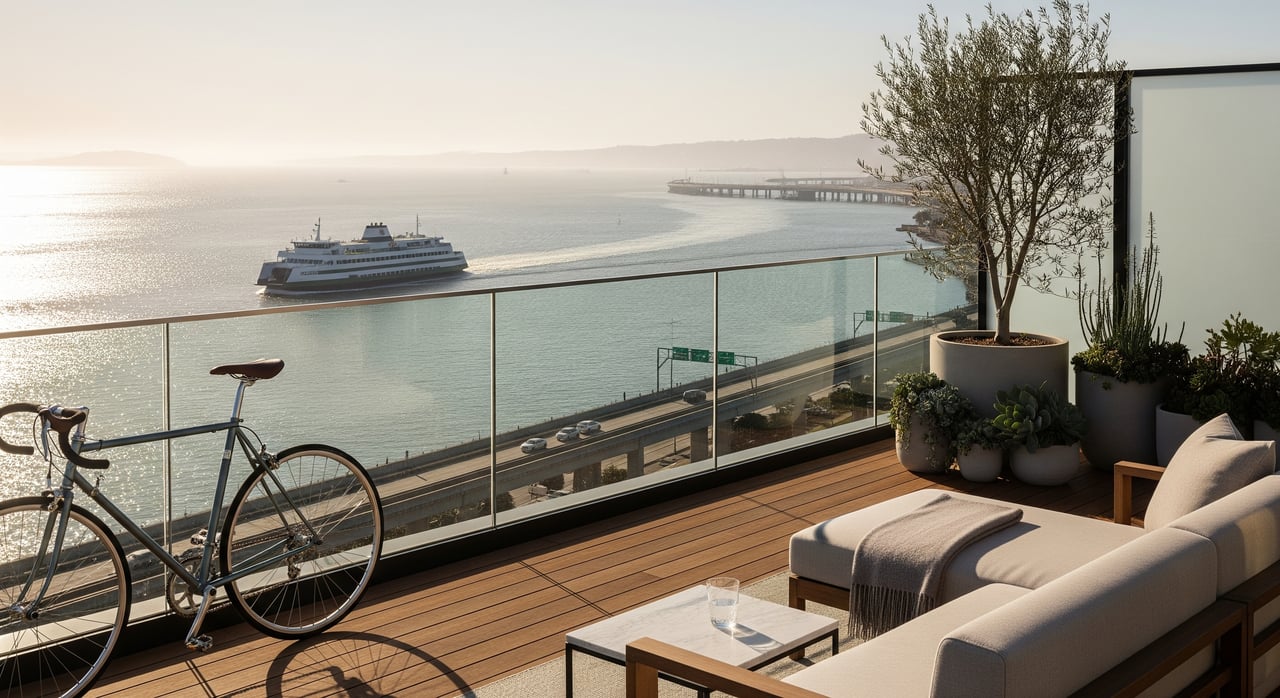
If your office is near the Ferry Building or along the Embarcadero, the ferry can be a comfortable and scenic way to cross the Bay. The closest terminals are Oakland Jack London Square and Alameda Main Street or Harbor Bay. You can usually reach them by a short drive, bike ride, or connecting bus.
Check routes, schedules, and fares on the San Francisco Bay Ferry site. The ride often has predictable travel times since it is not tied to highway traffic, and some routes offer amenities like Wi‑Fi.
AC Transit runs both local and transbay buses that connect East Bay neighborhoods with San Francisco. Routes and labels can change, so use the AC Transit site for current schedules and maps. If a transbay stop near you aligns with work hours, the bus can be a direct alternative to BART.
Casual carpool is an informal system where drivers pick up riders at designated East Bay spots for the San Francisco commute. Activity has fluctuated since the pandemic. If you are curious, confirm current pickup locations and etiquette through recent local sources before relying on it.
Driving gives you the most control over timing and routing. From Albany, the typical path to San Francisco is I‑80 west to the Bay Bridge. For Oakland destinations, you can use local streets or short hops on I‑80, I‑580, or I‑880. To the Peninsula, drivers usually cross the bridge then continue south on US‑101 or I‑280.
Use 511.org for real-time traffic and route planning, and check bridge tolls and lane rules with Bay Area FasTrak. Parking near downtown San Francisco or Peninsula job centers can add significant cost, so build that into your math.
Albany’s Solano Avenue corridor and central neighborhoods are relatively walkable compared with many suburbs. That can reduce first-mile time to local bus stops and services. To compare neighborhood walkability, check tools like Walk Score.
Biking is a strong option in the East Bay. Albany and nearby Berkeley have bike lanes and paths, including connections to the Ohlone Greenway. If you plan to combine bike and BART, scope out bike racks or lockers at stations in advance, since capacity and security can vary.
Local AC Transit routes connect Albany with North Berkeley and El Cerrito stations and other East Bay nodes. Some employers and schools operate shuttles, and microtransit pilots appear periodically. Confirm details with the relevant agency or employer.
For parking, El Cerrito del Norte typically offers the largest nearby BART parking supply, while North Berkeley and El Cerrito Plaza have smaller lots and specific rules. Ferry terminals in Oakland and Alameda may require daily parking or permits. Always confirm the latest policies on agency sites.
If you prize a fast BART ride to downtown San Francisco, living closer to North Berkeley or El Cerrito Plaza can trim your first mile. If you plan to drive or use the ferry, quick access to I‑80 or the Oakland or Alameda terminals might matter more. For Oakland commutes, BART or short drives can both be efficient, depending on your exact destination.
Think about where you will go most days. Then test your top two or three routes to see which feels sustainable.
A smart move is to try your real commute during your typical work hours before you sign a lease or make an offer.
As you test, track total time from door to desk, including walking, parking, and transfers. Also tally cost, including fares, tolls, and parking.
Albany gives you multiple viable ways to commute. BART is the most frequent to downtown San Francisco. Ferries are a great fit if you work near the Embarcadero and want a calmer ride. AC Transit can be convenient when schedules align. Driving offers flexibility, but traffic and parking can be costly.
If you are deciding where to live in Albany, match your daily destination with the mode that fits your routine. Then choose a neighborhood that supports your first mile, whether that is a short bike ride to BART or quick access to the freeway or ferry.
When you are ready to explore Albany homes that fit your commute and lifestyle, reach out to Mark P. Choi. You will get local guidance, a friendly, low-stress process, and a plan that puts your goals first.
Stay up to date on the latest real estate trends.

My objective is to get the top dollar for your home in the current dynamic real estate market and to make the process of listing or buying your home as stress-free and fun as possible.

MARK P. CHOI | CA DRE# 01433100
1619 Shattuck Avenue Berkeley, CA 94709