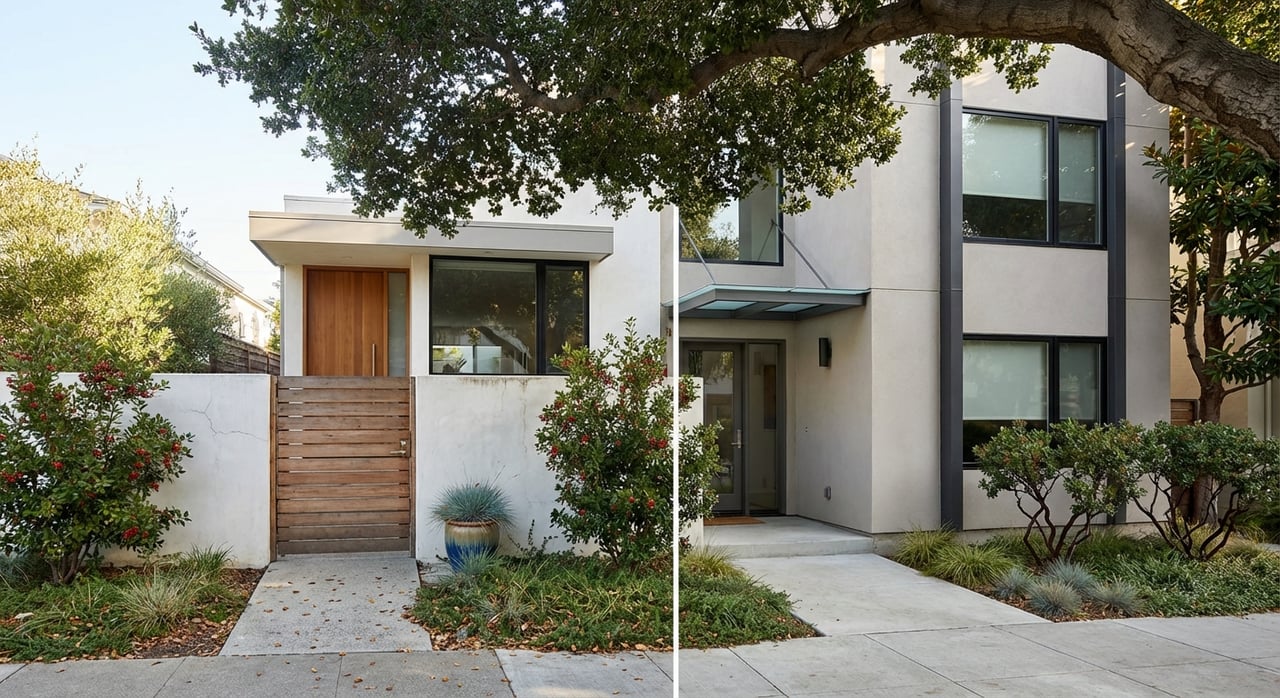
Oakland Condos vs Houses: Costs, Rules & Key Tradeoffs
Trying to decide between a condo and a house in Oakland? You are not alone. Both options can work well in the East Bay, but the right choice depends on your budget, lifestyle, and risk tolerance. In this guide, you will compare real costs, rules, and local factors like soft story retrofits so you can choose with confidence. Let’s dive in.
If you want a lower entry price and simpler exterior maintenance, a condo can open more doors in Oakland. Third-party reports show a clear price gap between condos and single-family homes, with condos often trading for less across many submarkets. You will still find overlap by neighborhood and building quality. Review recent local snapshots and building-specific comps before you write an offer. See how this split typically plays out in PropertyShark’s Oakland breakdown.
A house delivers more privacy, yard space, and control. You decide when to replace the roof or redo the landscaping. With that freedom comes responsibility, since there is no HOA to share big-ticket costs. Your monthly budget and your appetite for maintenance usually tip the scale one way or the other.
Condo owners pay monthly HOA dues that cover common-area upkeep, management, and often master insurance and some utilities. In the Bay Area, dues are among the highest in the country, commonly in the hundreds per month and sometimes over $1,000 in full-service buildings. Recent reporting confirms that Bay Area HOA dues are among the highest, so build that into your monthly plan.
Beyond dues, HOAs can levy special assessments for big projects, such as roof or elevator work. Review the HOA budget, reserve study, and delinquency rate to gauge future risk. California’s HOA framework, set by California’s Davis-Stirling Act, outlines what the association manages versus what falls to owners.
Earthquake insurance is separate in California. If you are eyeing a condo, the California Earthquake Authority offers unit policies with optional loss-assessment coverage, which can be important if your HOA’s earthquake coverage is limited or absent.
In Alameda County, plan on roughly 1 percent of assessed value plus voter-approved local assessments. Exact rates vary by tax-rate area and are set at purchase, then adjusted per state rules. For details on how assessments work and what to expect after you buy, check the Alameda County Assessor’s overview.
Condo loans look at both you and the building. FHA, VA, and conventional lenders follow project-level rules around reserves, owner-occupancy, delinquency, insurance, commercial space, and litigation. Some buildings are non-warrantable and may require a larger down payment or specialty financing. Learn how approvals work in HUD’s condo guidance.
Before you write an offer on a condo, ask for:
If you need FHA or VA financing, confirm project eligibility early. If broad buyer financing at resale matters to you, remember that houses are usually simpler to underwrite.
Condo living shifts many exterior responsibilities to the HOA. That can save you time and reduce surprise repair bills, especially in larger buildings with professional management. Be sure the HOA has healthy reserves and realistic dues, or you could face special assessments later.
With a house, you are in charge of all upkeep. The upside is full control over projects and timeline. The tradeoff is planning for larger, less predictable expenses, like roofs, sewer laterals, and foundation work. Set aside a maintenance reserve in your budget so you can manage those costs without stress.
Oakland requires seismic evaluation and, for many older multiunit buildings, retrofit work under its Mandatory Soft Story Retrofit Program. If you are buying a condo in an older building, confirm whether the HOA has completed required work or if assessments are planned. Retrofit costs can range widely based on size and complexity and may be shared across owners.
For single-family homes, seismic retrofits are voluntary in many cases, but strongly recommended. You control the scope and timing, and you can budget the work into your ownership plan. Ask your inspector about anchoring, cripple walls, and any prior retrofit permits.
If you plan to rent out your property, learn Oakland’s Rent Adjustment Program and just-cause rules. Coverage and exemptions vary by property type and age, so confirm your unit’s status through the City’s RAP office. You can start with the City’s Rent Adjustment Program guide.
Condo associations can have rental caps, short-term rental restrictions, and pet rules that affect both your lifestyle and resale pool. Ask for the CC&Rs, house rules, and any amendments.
Thinking about conversion history or future supply? Oakland regulates condo conversions and includes tenant protections and replacement-housing requirements in many cases. For context, review the City’s page on condominium conversions.
EV charging is another practical factor. California law limits how HOAs can restrict owner-installed EV chargers in assigned or exclusive-use parking, while setting clear owner responsibilities. If an EV matters to you, review Civil Code Section 4745 and confirm your building’s process before you buy.
You will find most condos around Downtown, Jack London, Lake Merritt, West Oakland, and parts of North Oakland, especially near BART. Many options include loft conversions, mid-rise buildings, and a few full-service towers.
Detached homes cluster in hillside and neighborhood districts such as Rockridge, Montclair, Trestle Glen, and Redwood Heights, where lots and yards drive premiums. Inventory and pricing vary by season and price band, so pair your neighborhood wish list with an up-to-date market snapshot before you start touring.
Your choice will come into focus once you line up your budget, ownership style, and the right neighborhood. If you want a local, low-stress path to the best fit, connect with Mark P. Choi. You will get clear advice, on-the-ground context, and a polished search process tailored to Oakland and the greater East Bay.
Stay up to date on the latest real estate trends.

My objective is to get the top dollar for your home in the current dynamic real estate market and to make the process of listing or buying your home as stress-free and fun as possible.
MARK P. CHOI | CA DRE# 01433100
1619 Shattuck Avenue Berkeley, CA 94709